
About
Power electronics engineer · Power delivery for AI and data-center processors
I design the circuits and packages that deliver hundreds to thousands of amperes to a processor with less loss and in less space.
From 2019 to 2023 I worked at Infineon Technologies on the power stages and power modules in its data-center AI power portfolio, and I am a named inventor on 8 issued U.S. patents and 2 pending applications. I now work on power management in Apple's Silicon Engineering Group. I also review manuscripts for IEEE Transactions on Power Electronics, IEEE Open Journal of Power Electronics, IEEE Access and IEEE Power Electronics Magazine.
Education
University of Colorado Boulder
University of Pune, India
Patents
8 issued U.S. patents and 2 published U.S. applications in three areas: power modules, TLVR control and stacked power delivery. See all patents →
Talks
- Conference Power Loss Reduction in Power Distribution Network Through Vertical Stacking
Kushal Kshirsagar, Danny Clavette, Prasan Kasturi, Wenkang Huang
Peer review
- Journal IEEE Transactions on Power Electronics
- Journal IEEE Open Journal of Power Electronics
- Journal IEEE Access
- Magazine IEEE Power Electronics Magazine
Below is what I worked on, grouped by area, with a public source for each statement. Every claim is tagged by the kind of source behind it, so you can check it yourself.
Impact in numbers
Recent record
How to read the source tags
Patent record an issued patent or published application you can open on Google Patents. Company document a datasheet, press release or product page published by the company. Independent a third party (trade press, another company, a conference).
Patents
8 issued U.S. patents and 2 published U.S. applications, grouped by technical area. Each number links to its Google Patents record.
Trans-Inductor Voltage Regulator (TLVR) 1 issued
A trans-inductor voltage regulator couples the output inductors of a multiphase buck regulator through an extra winding, so every phase responds to a load step at once. This patent controls the current in the winding that links the phases, letting the regulator run in different modes, including over-current protection.
- Issued Trans-Inductance Multi-Phase Power Converters and ControlYong Zhou, Danny Clavette, Jens A. Ejury, Prasan Kasturi, Kushal Kshirsagar
Power Modules for Vertical Power Delivery 4 issued · 2 pending
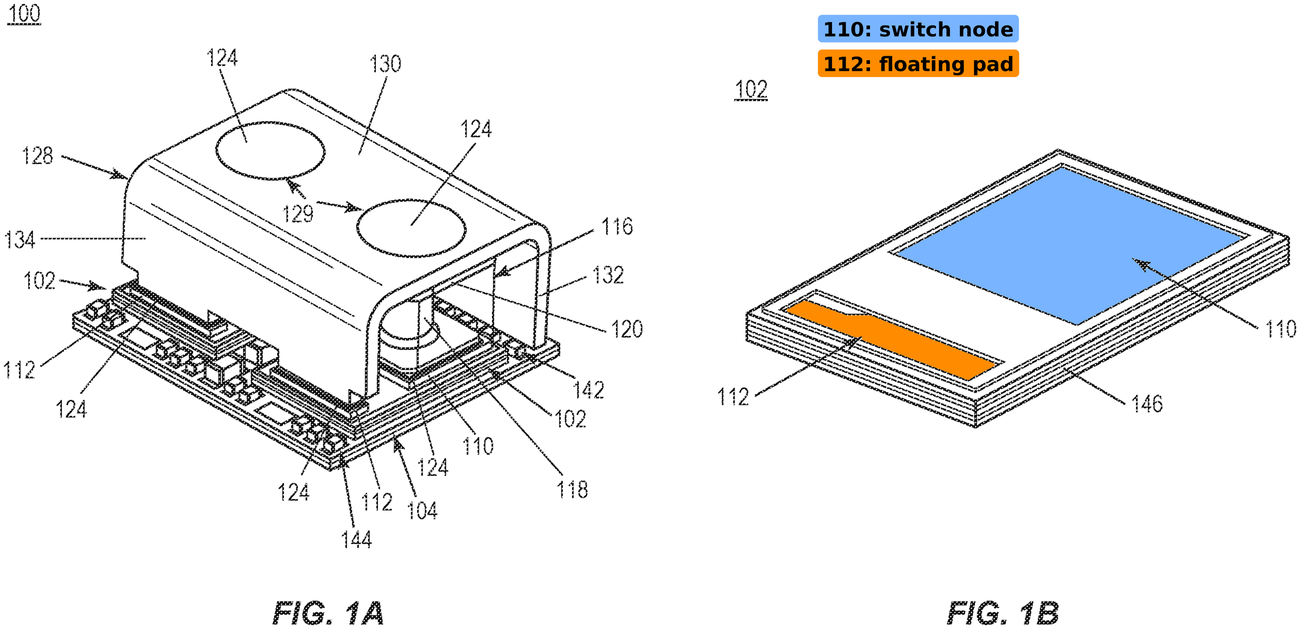
Board area next to a processor is limited, so how compactly the voltage regulator is built sets how much current can reach the chip. These patents put the inductor and power stage in one module, with the inductor on top of the power stage and thermally coupled to it. That shortens the current path, draws heat out of the power stage and shrinks the footprint. They also cover inductor connectivity, multi-device module arrangements and an embedded power-stage package with a shielding pad.
- Issued Inductor Connectivity and AssembliesKushal Kshirsagar, Eung San Cho, Luca Peluso, Danny Clavette, Angela Kessler
- Issued Semiconductor Device Package Thermally Coupled to Passive ElementKushal Kshirsagar, Eung San Cho, Arun Kumar Gnanappa, Wenkang Huang, Angela Kessler, Marcel Rene Mueller, Stephen Pullen
- Issued Voltage Regulator Module Having a Power StageLuca Peluso, Kushal Kshirsagar, Paul Yeaman, Anil Jeswani, Marco Pennetti, Kok Yau Chua
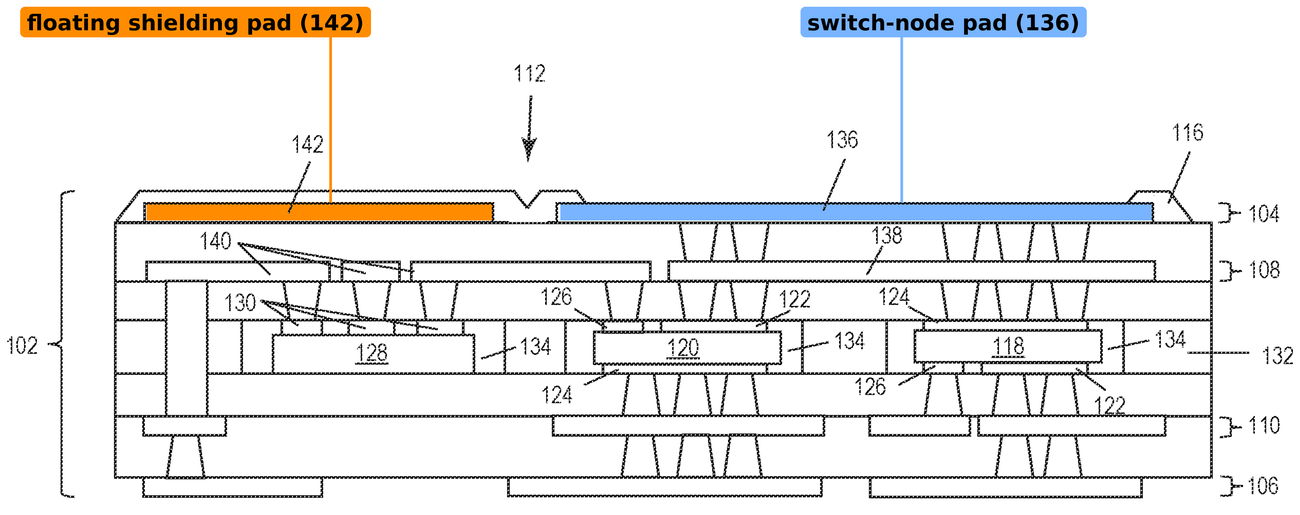
- Issued Embedded Package with Shielding PadRobert Fehler, Angela Kessler, Kushal Kshirsagar, Emanuele Bodano, Martin Benisek
- Pending Multi-Device Power Module ArrangementKushal Kshirsagar, Eung San Cho, Danny Clavette, Wenkang Huang, Angela Kessler
- Pending Embedded Package with Shielding Pad (continuation)Robert Fehler, Angela Kessler, Kushal Kshirsagar, Emanuele Bodano, Martin Benisek
Series-Connected Dynamic Loads 3 issued
Stacking processor cores in series lets the main regulator deliver a fraction of the current at a multiple of the voltage: four cores need 125 A at 3.6 V instead of 500 A at 0.9 V, which cuts distribution loss to one sixteenth. The difficulty is that real cores draw unequal, fast-changing current. These patents regulate each stacked load's voltage, set the supply current from the loads' measured consumption, and detect a transient in any single load while keeping the whole stack in regulation.
- Issued Power Supply System and Control in a Series Dynamic Load ConfigurationKushal Kshirsagar, Prasan Kasturi, Danny Clavette, Darryl Tschirhart
- Issued Power Supply System and Control in a Dynamic Load ConfigurationDarryl Tschirhart, Kushal Kshirsagar, Danny Clavette, Prasan Kasturi
- Issued Power Supply System and Current Control Based on Consumption by Dynamic LoadsDarryl Tschirhart, Kushal Kshirsagar, Danny Clavette, Prasan Kasturi
Power stages
The power stage is the chip that switches the current into a processor. In a conventional board its heat leaves through the board. A chip-embedded power stage with a floating shielding pad can instead pass heat up into an inductor and a heat sink.
Infineon TDA22590
- Intel Gaudi 342 power stages, counted on the module photo. IEEE Spectrum
- Intel Gaudi 228 power stages, counted on the module photo CNBC
- Delta Electronicsvertical power modules built on this power stage. Infineon, Aug 28, 2025
What I worked on
I worked on the definition of the TDA22590, Infineon's first chip-embedded power stage, and later proposed adding a floating shielding pad so heat could flow into the inductor of a co-packaged power module.
Patents
Products built on it
Product usage and independent coverage
Counts are mine, made by counting the chips in the linked photographs.
- Intel Gaudi 2 module · 28 power stagesCounted on Intel’s launch-event photograph, Dec 14, 2023.
- Intel Gaudi 3 module · 42 TDA22590 power stagesCounted on Intel’s press-kit photograph, where the chip marking reads TDA22590.
- Gaudi 3, Intel’s 2025 shipment target · about 8.4–10.5 million power stagesEstimate, not a count: a reported target of 200,000–250,000 modules times 42. It is a target, not shipments.
Power modules
A power module puts two power stages, their inductors and decoupling capacitors on one substrate, with each inductor stacked on top of its power stage. This saves board area and lets the module sit beneath the processor.
Infineon TDM2254xx dual-phase modules
- d-Matrix Corsair card18 TDM2254xx modules per card, counted on the card photo Infineon, May 12, 2026
- Corsair in productiond-Matrix, Jun 9, 2026
- Deployed by Parasaild-Matrix, Jul 7, 2026
What I worked on
I developed the inductor assemblies and the connection to the power stage used in Infineon's TDM data-center power modules, and am a named inventor on the patents below.
Patents
Products built on it
Product usage and independent coverage
The count is mine, made by counting the modules in the photograph.
- d-Matrix Corsair AI accelerator card · 18 TDM2254xx modules per cardCounted on d-Matrix’s published photograph of the card. Infineon states that Corsair uses its power modules.
From first filing to products
Control: trans-inductor voltage regulators (TLVR)
A TLVR couples the output inductors of a multiphase regulator so the regulator answers fast load changes better. The architecture itself was invented by others; my work was on how such a regulator is controlled.
What I worked on
I am a named inventor on US 11,876,445, which describes control of a trans-inductance multi-phase converter. It ranks 4th of 224 U.S. patents in the same class (CPC H02M3/1584) and priority year (2020) by later citations: 27, against a median of 4 (Google Patents search, my ranking table).
The control patent, and what its claims cover
Figure 2 of US 11,876,445 shows the regulator in its over-current mode. The series circuit path (dashed blue) runs through a winding of every phase and the compensation inductor Lc. The controller watches the current in that path with the current monitor and can open the series switches (Q1 and Q2, orange).
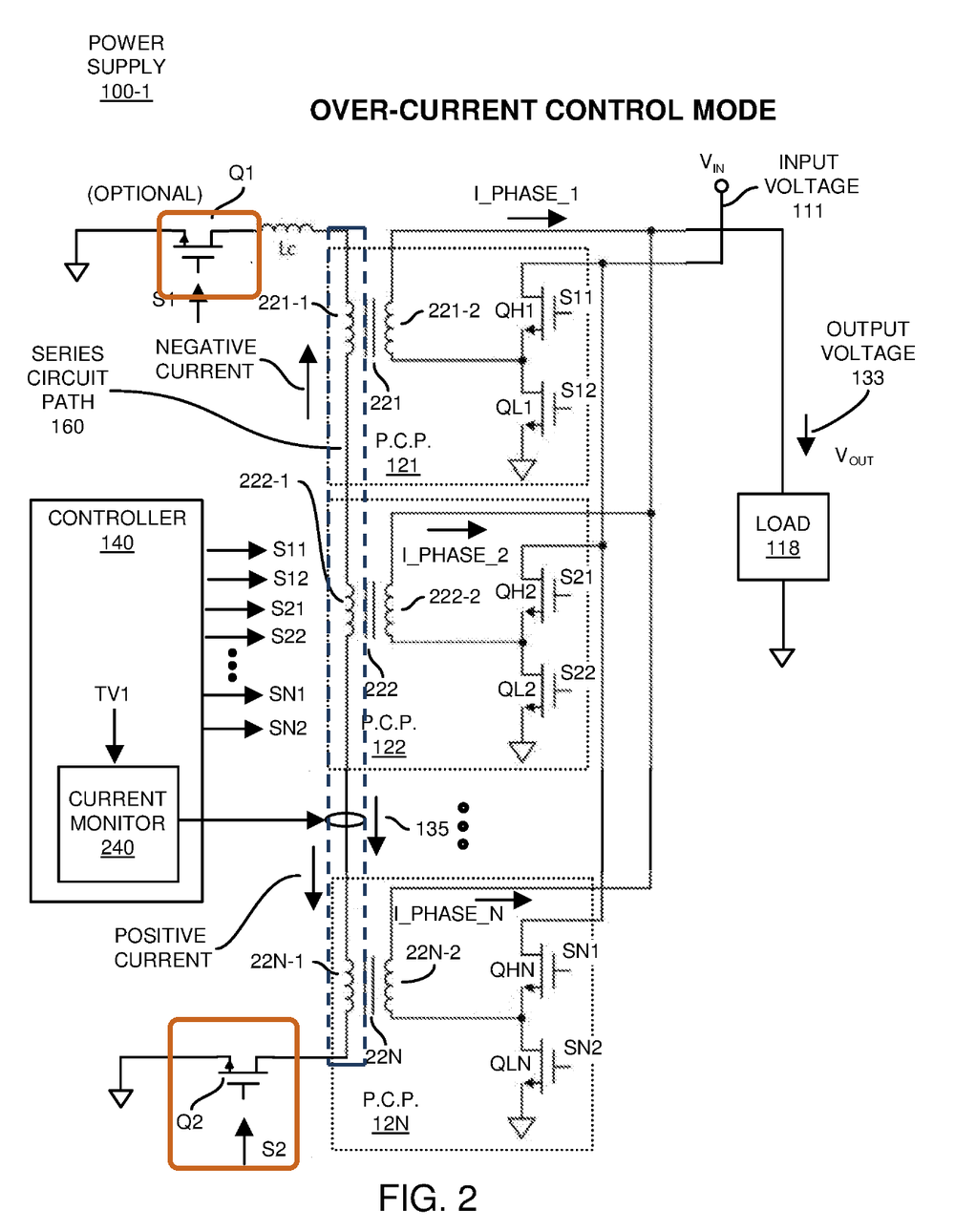
US 11,876,445, FIG. 2 (published as US 2022/0109368). Patent drawing; orange and blue highlights added by me. Patent record
Monitoring the loop current
The controller measures the size of the current in the series path that links the phases and adjusts that current according to what it measures.
Claims 1, 12Over-current protection
When the monitored series-path current is above a threshold, or an over-current condition is detected, the controller reduces the series-path current, which limits how a fault spreads between phases.
Claims 3, 14, 25, 35Decoupling the phases
A switch in series with the path, controlled by the controller. Opening it decouples the phases from each other.
Claims 6, 16, 17, 33Power saving at light load
When the output current falls below a threshold, the controller reduces the series-path current. With the path open and one phase active, the idle phases do not circulate ripple current, so their body-diode losses are avoided. The controller also switches its PID settings between the two modes.
Claims 10, 21, 36PID: 11, 22Loop bandwidth control
A resistive component in series with the path sets the current magnitude. Lower resistance gives a higher control-loop bandwidth.
Claims 7, 8, 9, 18–20Patents
Products built on it
Infineon's digital multiphase controllers list TLVR support, and Analog Devices' own TLVR patent lists my application among its references. The datasheets do not say which patents they use.
- Infineon XDPE15284D · 8-phase controllerLists digital current emulation for TLVR inductors and TLVR secondary open and short detection.
- Infineon XDPE192C4C · 12-phase controllerLists digital current emulation for TLVR inductors and TLVR secondary open and short detection.
- Infineon XDPE1D2G3C · newer controller (2026)Part from the same family, introduced in 2026.
- Analog Devices, US 12,278,551 · TLVR current sensingIts list of cited patents includes my application, US 2022/0109368.
Product usage and independent coverage
Platforms that use Infineon's TLVR-capable digital controllers, from public sources.
- ASUS Pro WS W890-SAGE · Xeon workstation motherboardA hands-on review lists the Infineon XDPE192C4C as the board's voltage-regulator controller.
- Supermicro C9Z890-MW · Z890 desktop motherboardA hands-on review (March 11, 2025) identifies the Infineon XDPE192C4C (12-phase) and XDPE19284C (8-phase) controllers on the board.
- Ampere CPU server platformsInfineon offers a TLVR solution for Ampere CPU platforms, built from its XDP digital multiphase controllers and OptiMOS power stages. The page does not name the controller part.
Architecture: stacked power delivery
Loss in board copper grows with the square of the current. Stacking processor loads in series lets the main regulator deliver a fraction of the current at a multiple of the voltage, so the current itself comes down.
What I worked on
I was first author and presenter of an industry-session presentation at IEEE APEC 2021 showing four stacked loads at 125 A and 3.6 V instead of 500 A at 0.9 V, and I am a named inventor on three stacking patents.
The stacking patent: how the loads are fed in series
Figure 1 of US 11,990,748 shows the idea. One power source drives a single supply current through a stack of loads connected end to end. Each load has its own power converter and controller that supply or take away the difference between that load's current and the supply current, so every load keeps its own voltage.
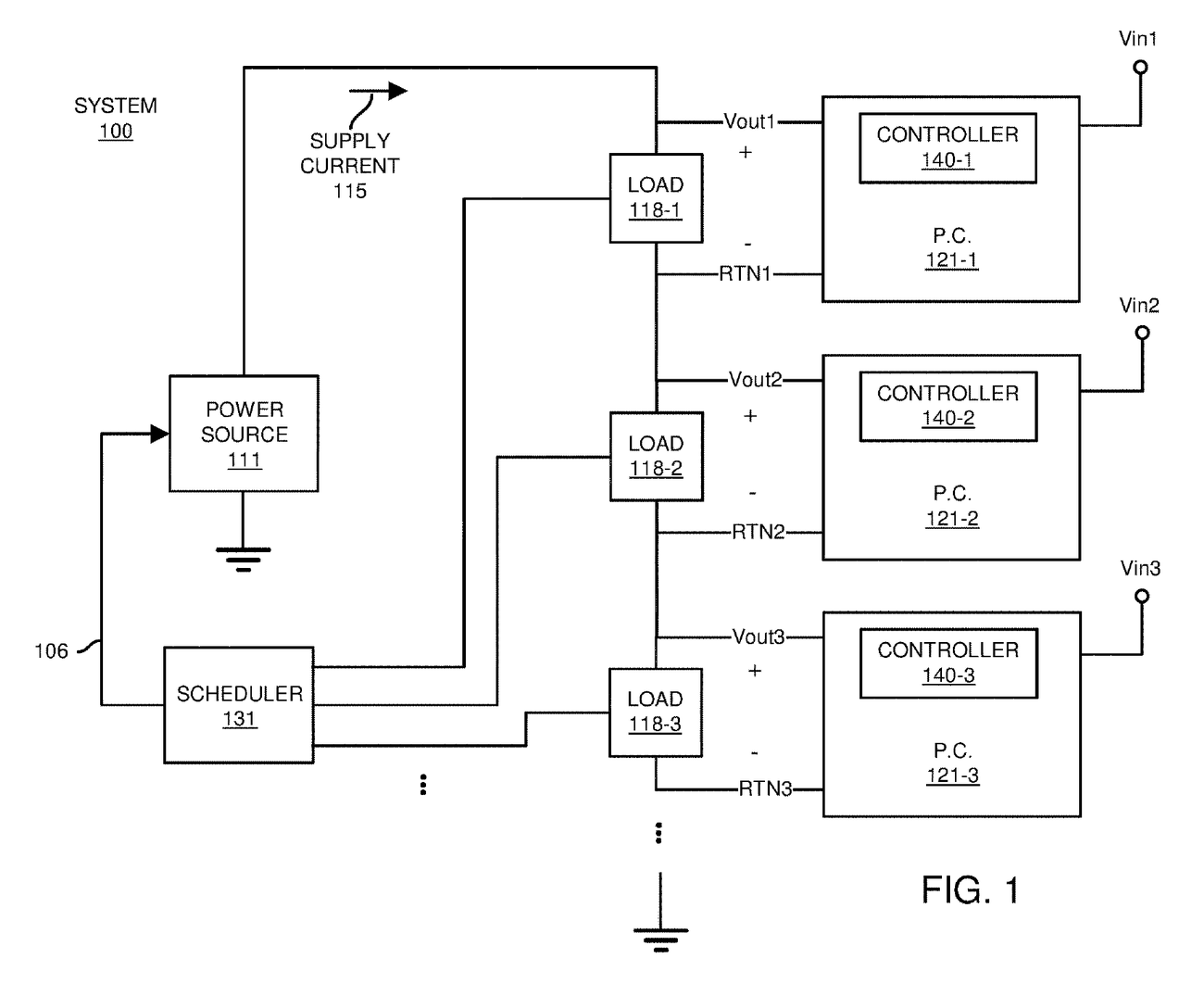
US 11,990,748, FIG. 1 (published as US 2022/0368230). Patent drawing, rotated for reading. Patent record
Power source 111 and supply current 115
A single regulator feeds the whole stack. The supply current flows through every load in turn, so it is a fraction of what a parallel arrangement needs.
Loads 118-1, 118-2, 118-3
Dynamic loads such as processor cores, connected in series. Each draws a different, fast-changing current.
Power converters 121-x and controllers 140-x
Each converter is wired across its own load (Vout and RTN). Its controller monitors the voltage across that load, compares it with a reference and operates the converter phases to hold the voltage.
Scheduler 131
Coordinates the work given to each load and informs the power source, so that the supply current follows what the loads need.
Patents
Products built on it
Product usage and independent coverage
Where this work is used
Each row below names a product or company and links to a public source. None of them is a statement from me.
Talks and service
Talks
- IEEE APEC 2021, industry session: Power Loss Reduction in Power Distribution Network Through Vertical StackingConferenceFirst author and presenter, with D. Clavette, P. Kasturi and W. Huang. Virtual conference, June 14–17, 2021.
Peer review
- IEEE Transactions on Power ElectronicsJournalReviewer
- IEEE Open Journal of Power ElectronicsJournalReviewer
- IEEE AccessJournalReviewer
- IEEE Power Electronics MagazineMagazineReviewer
Hobby projects
Things I build outside work. These are my own photos, and they are not part of the patent record.
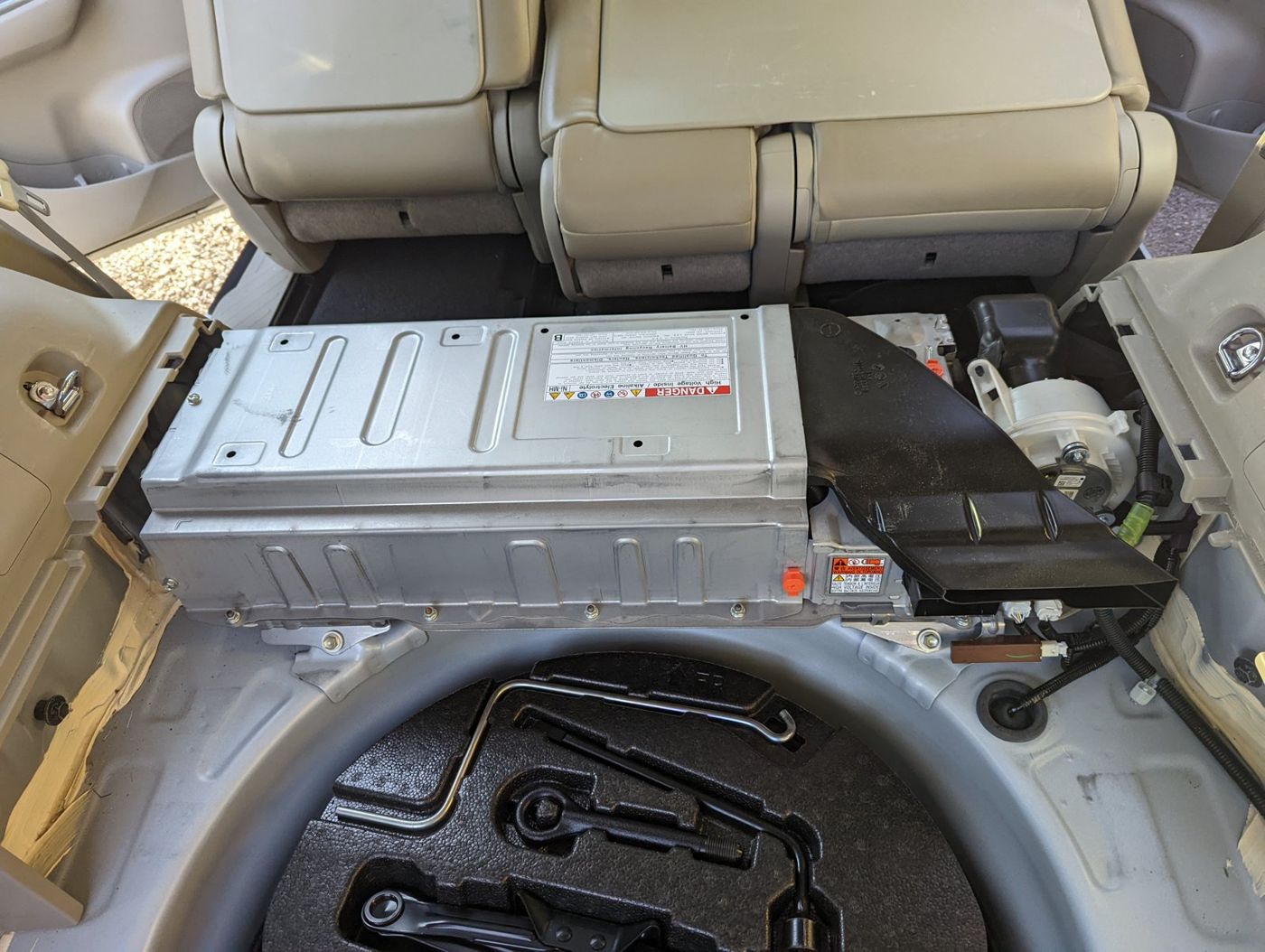
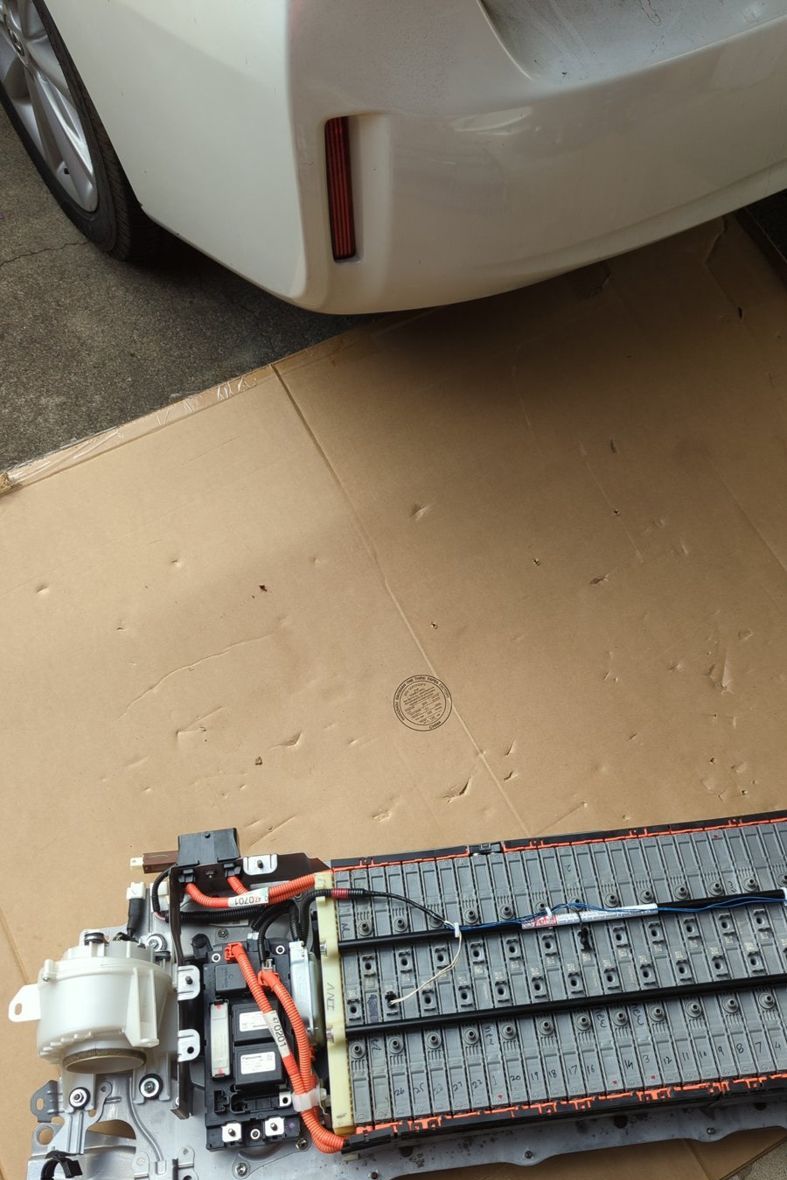
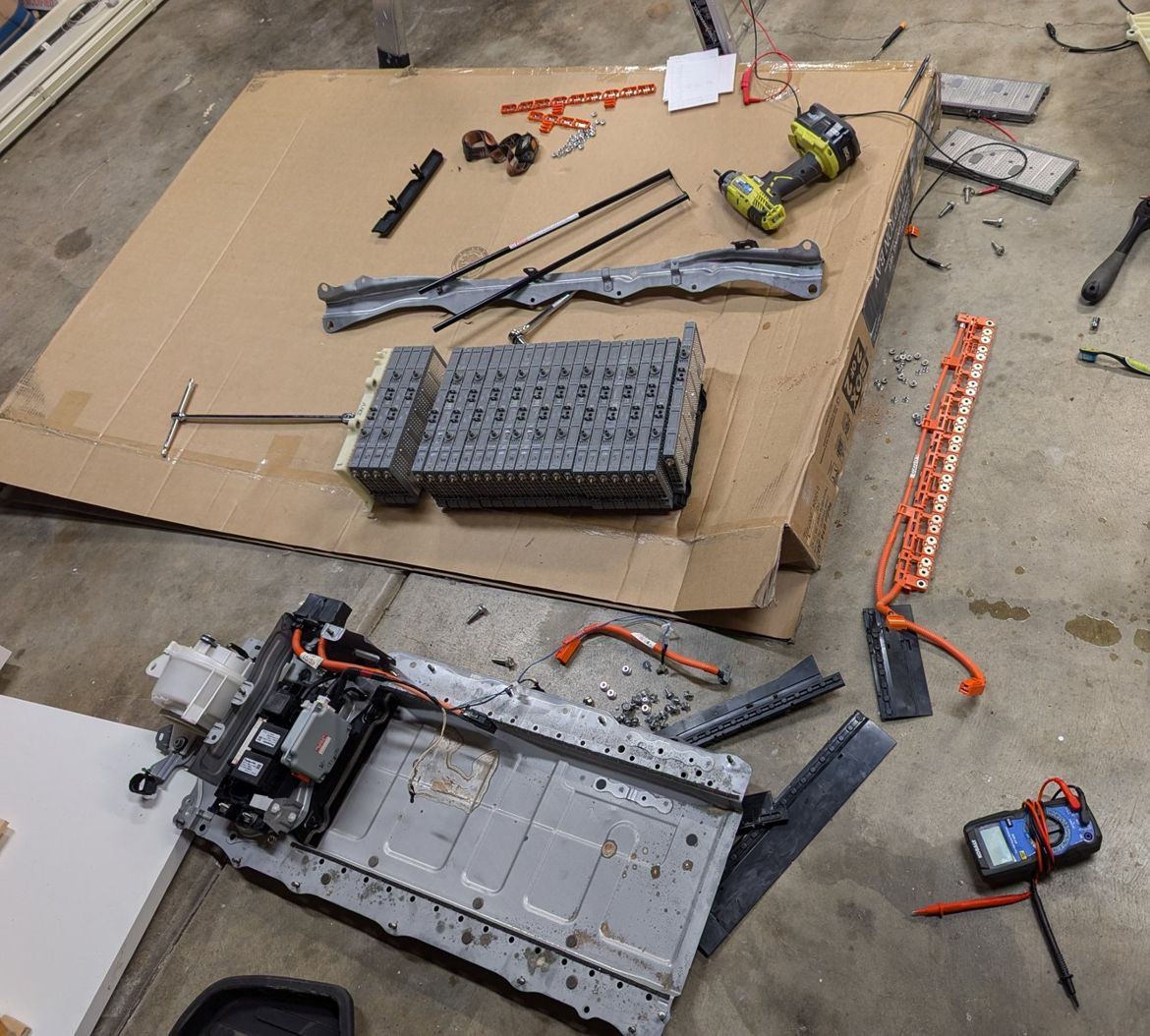
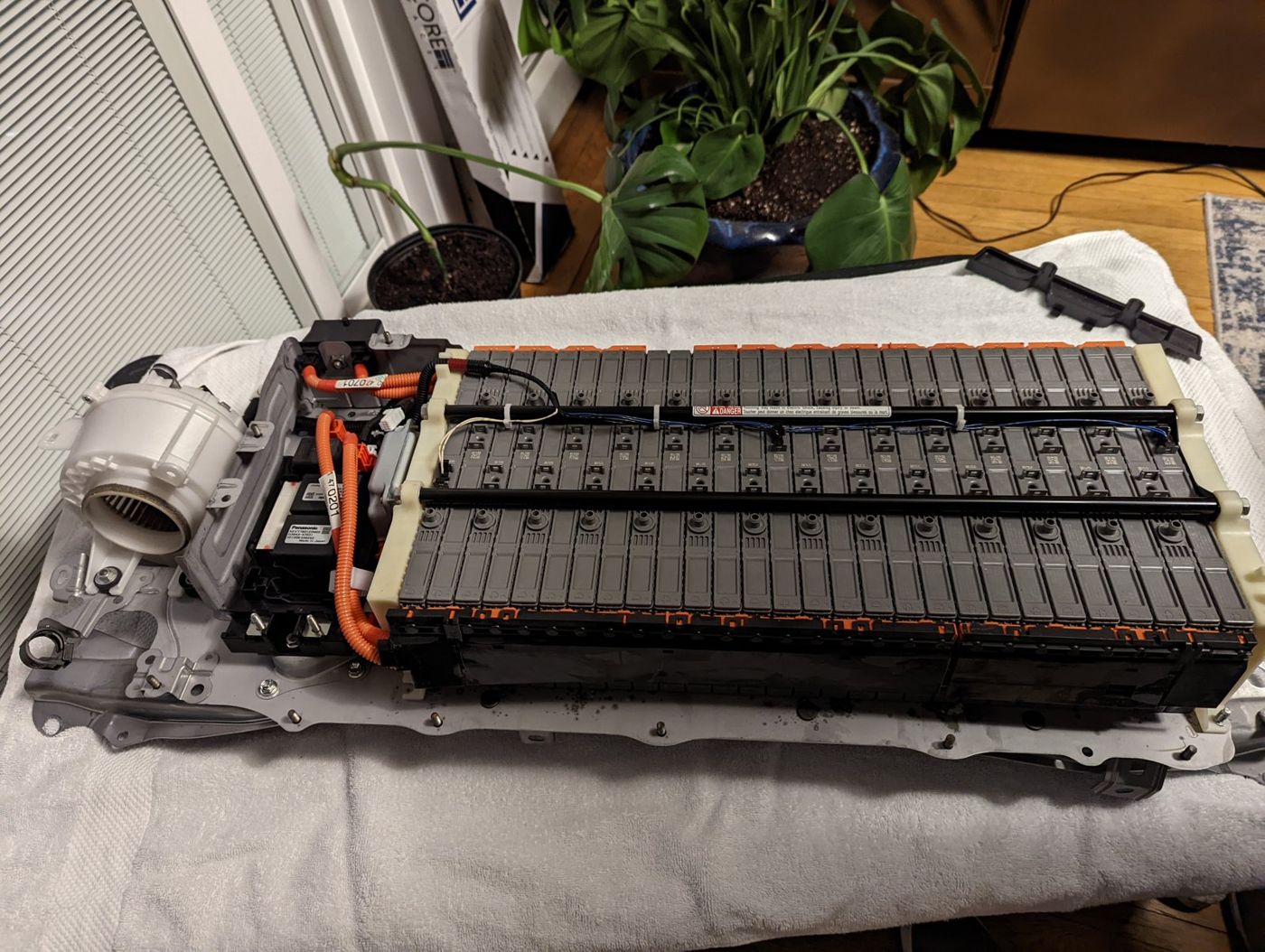
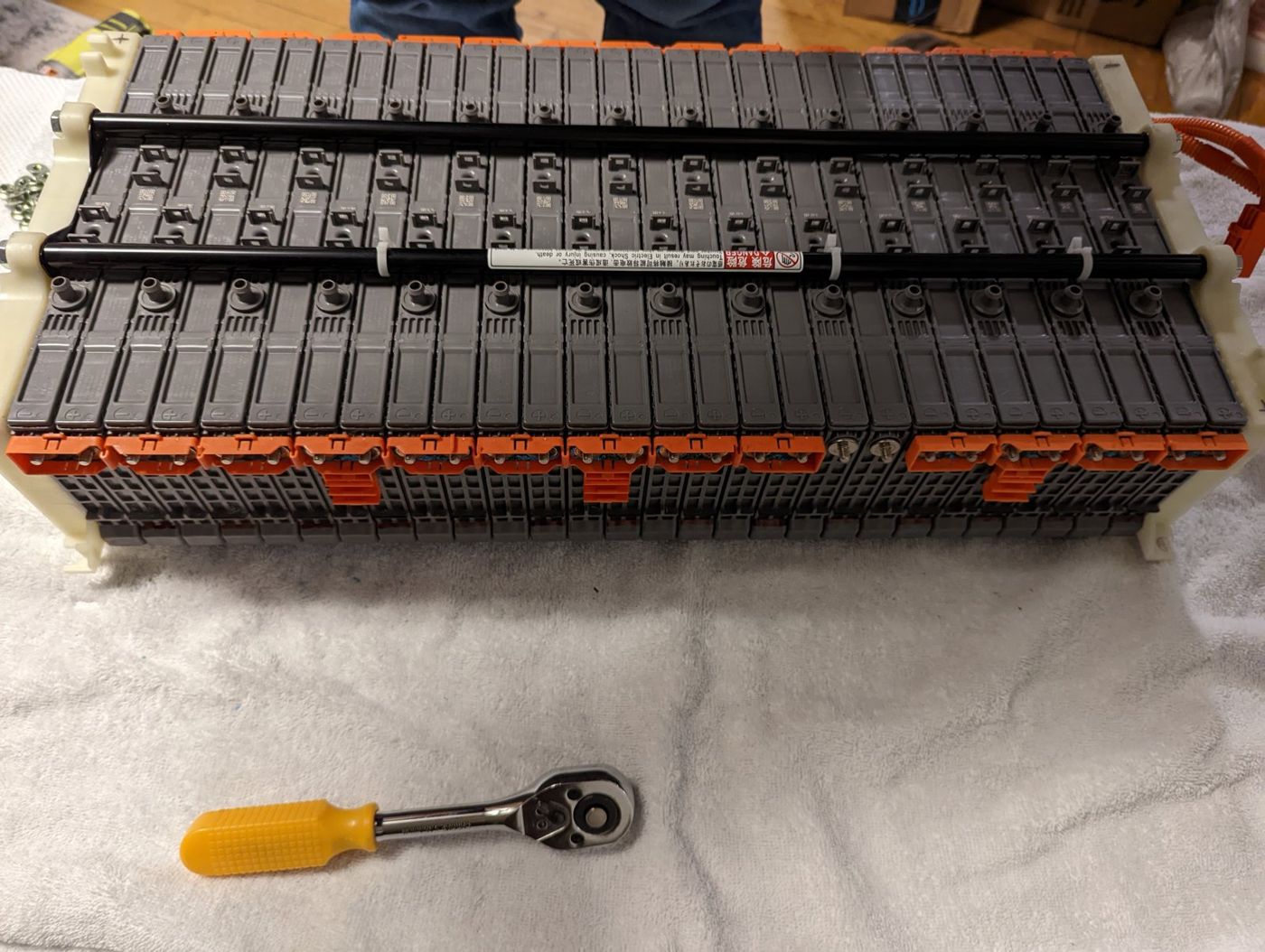
Replacing weak cells in my Toyota Prius V battery
The hybrid battery in my Prius V had a few weak cells. I took the pack out of the car, opened it, checked the cells with a multimeter and replaced the weak ones.
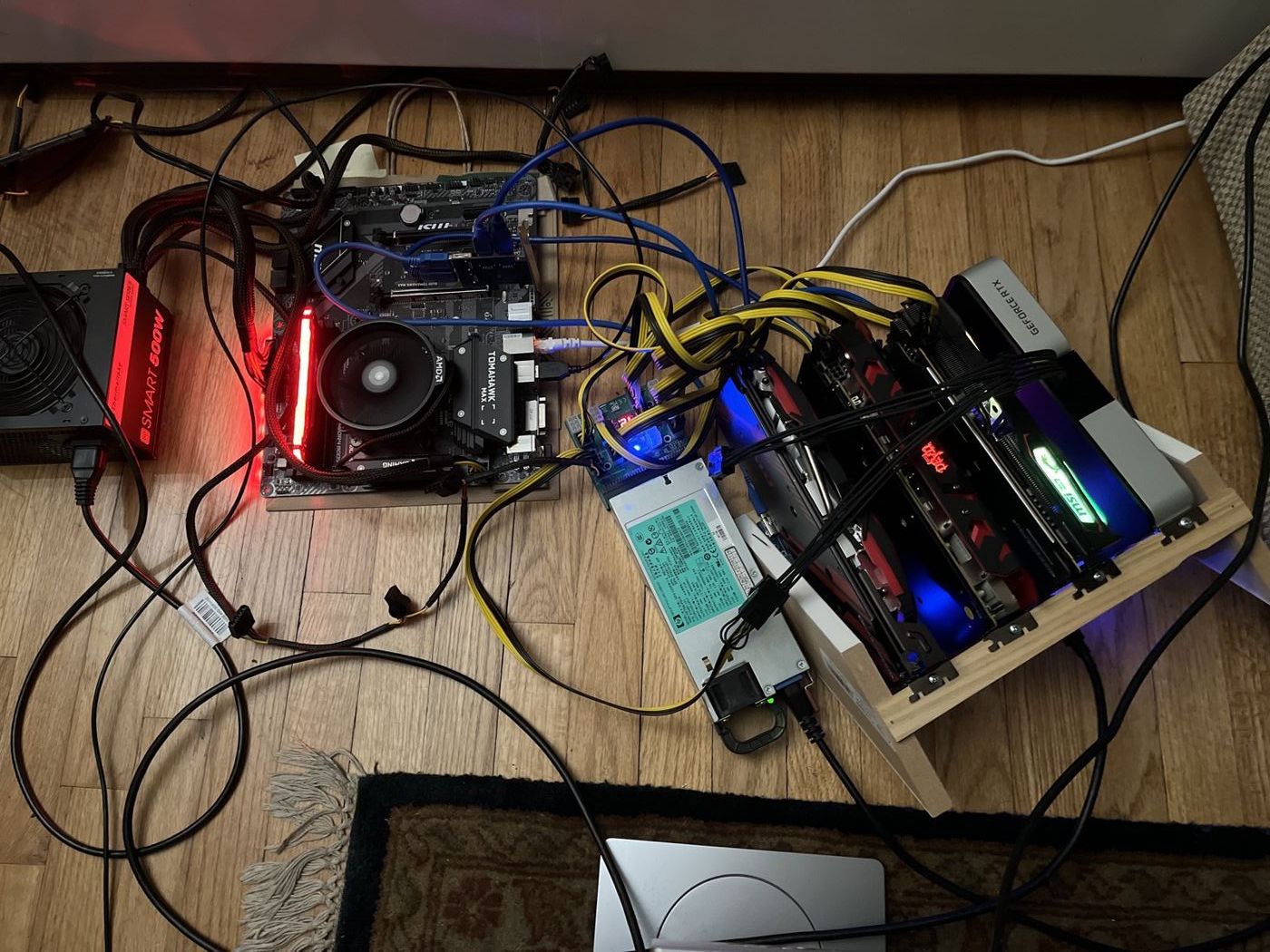
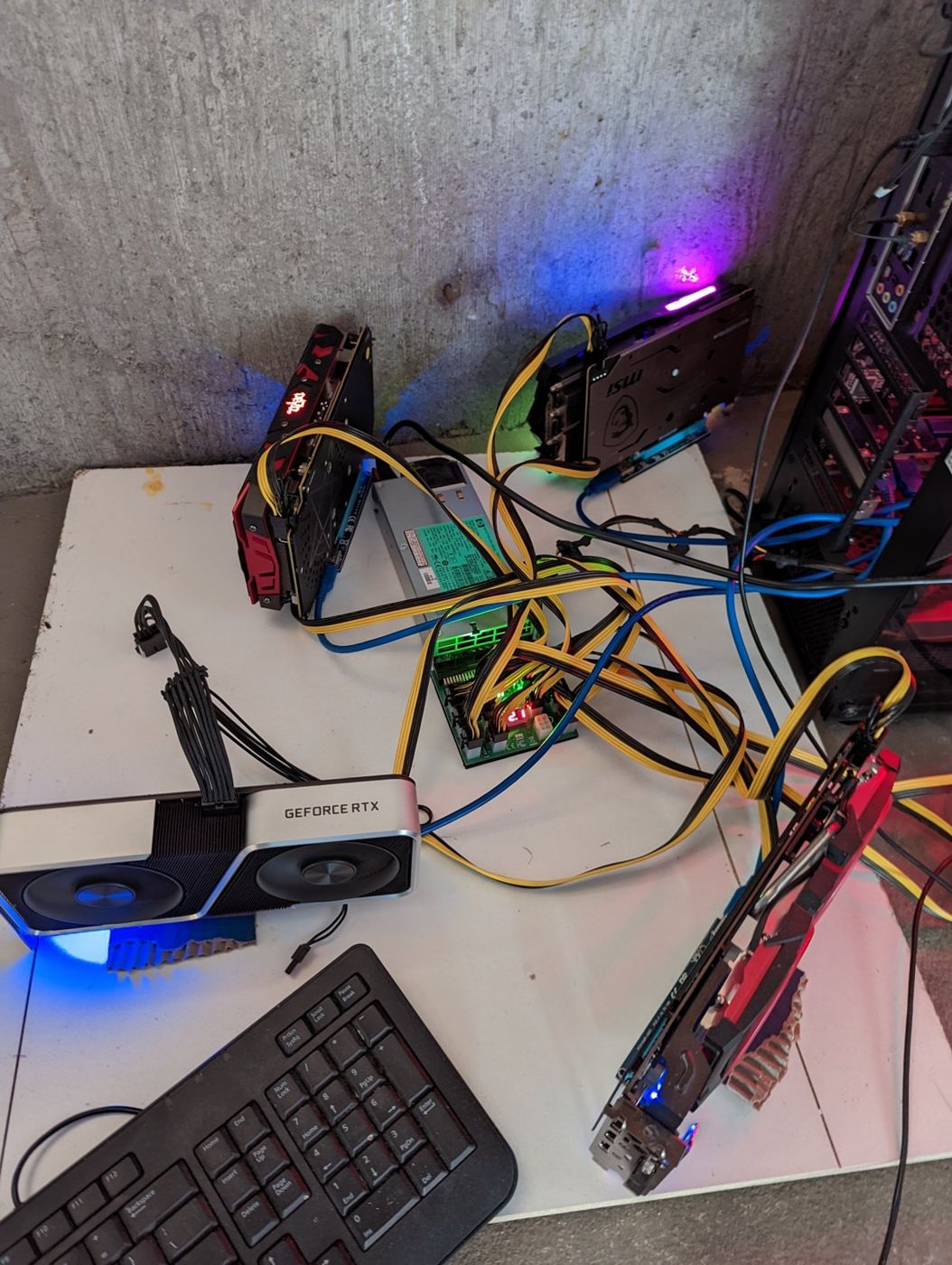
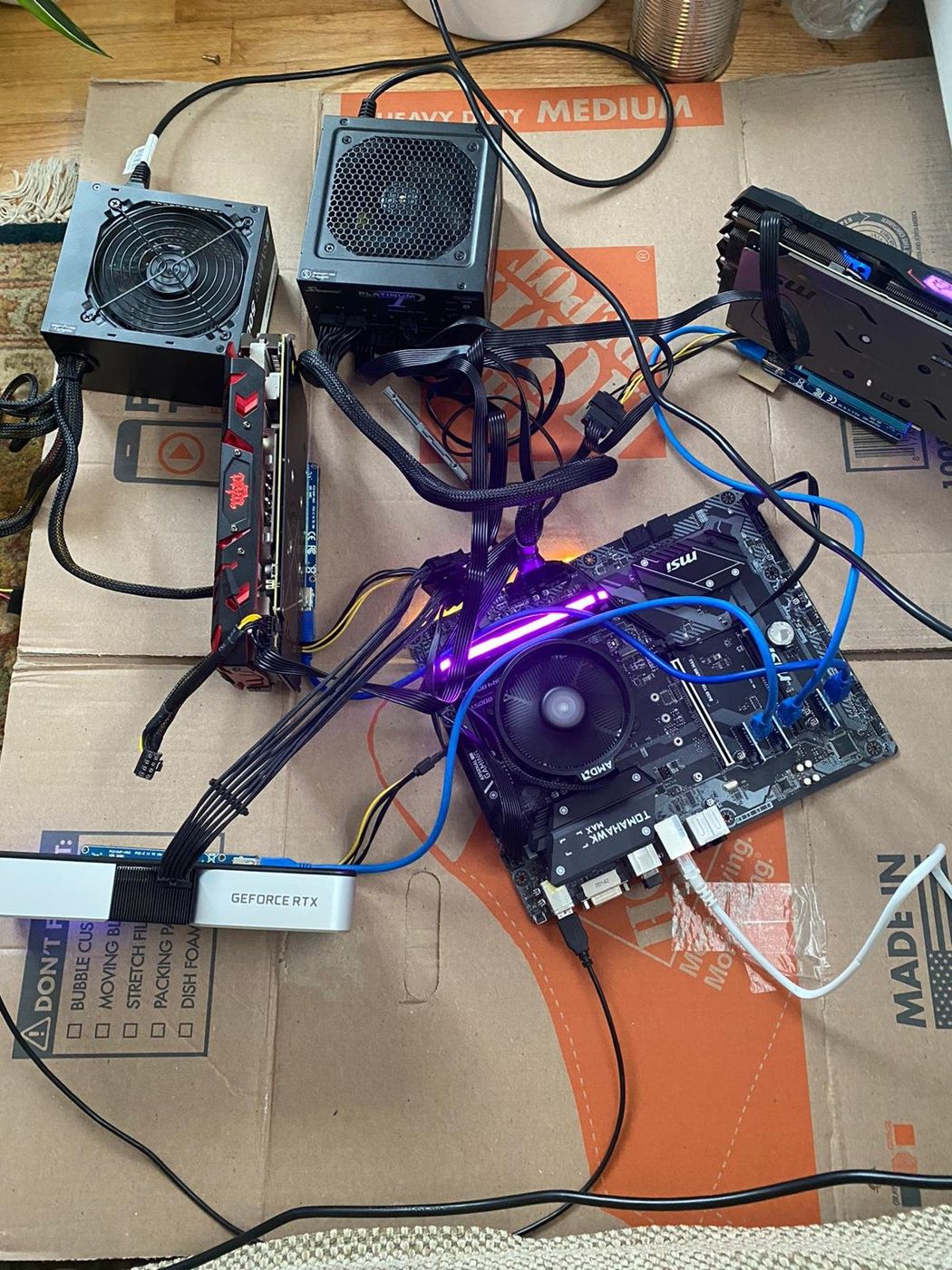
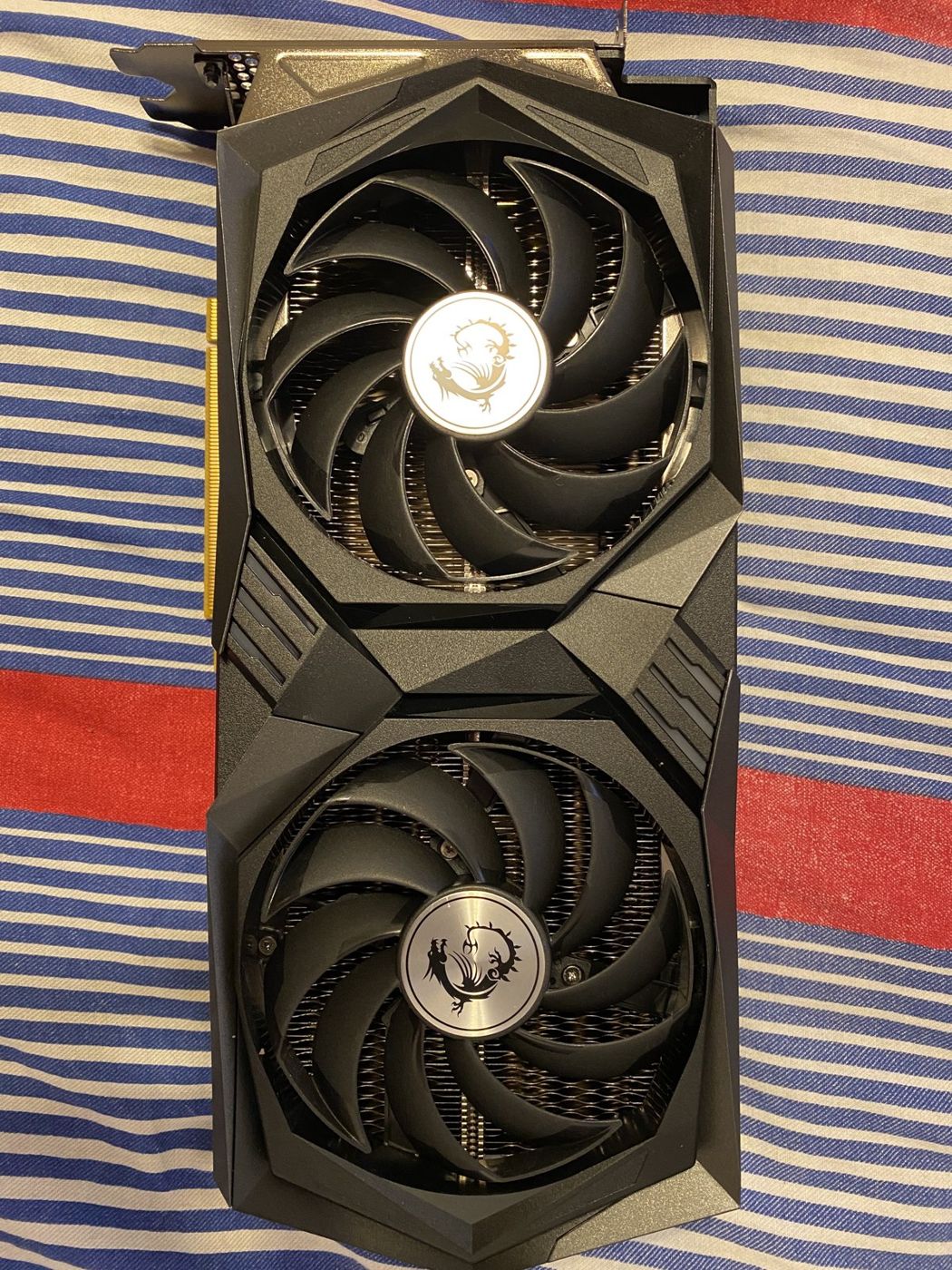
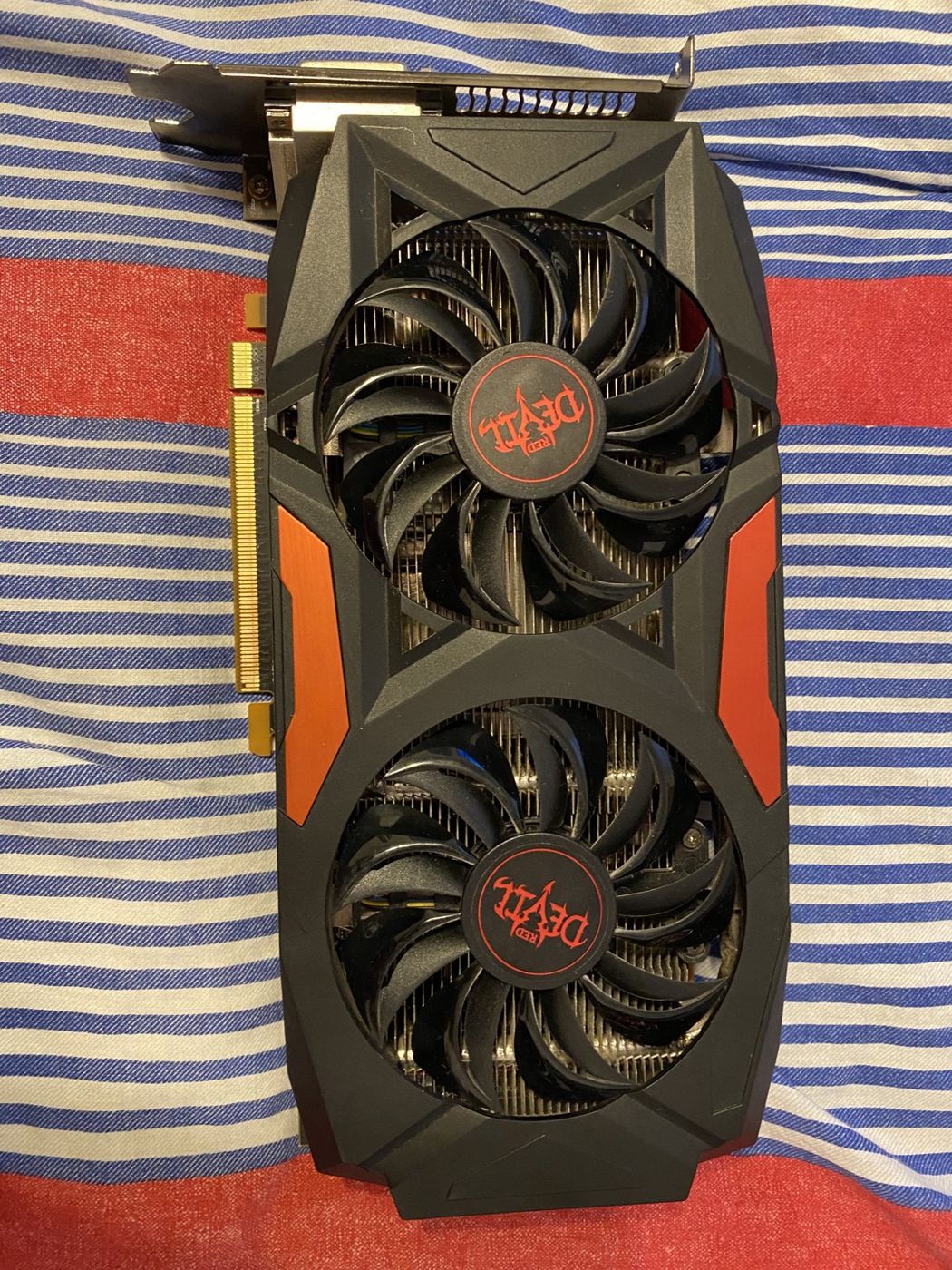
Four-GPU mining rig
I built an open-frame rig around four GPUs, powered by a server power supply, and ran it with NiceHash.
Solar power for the mining rig
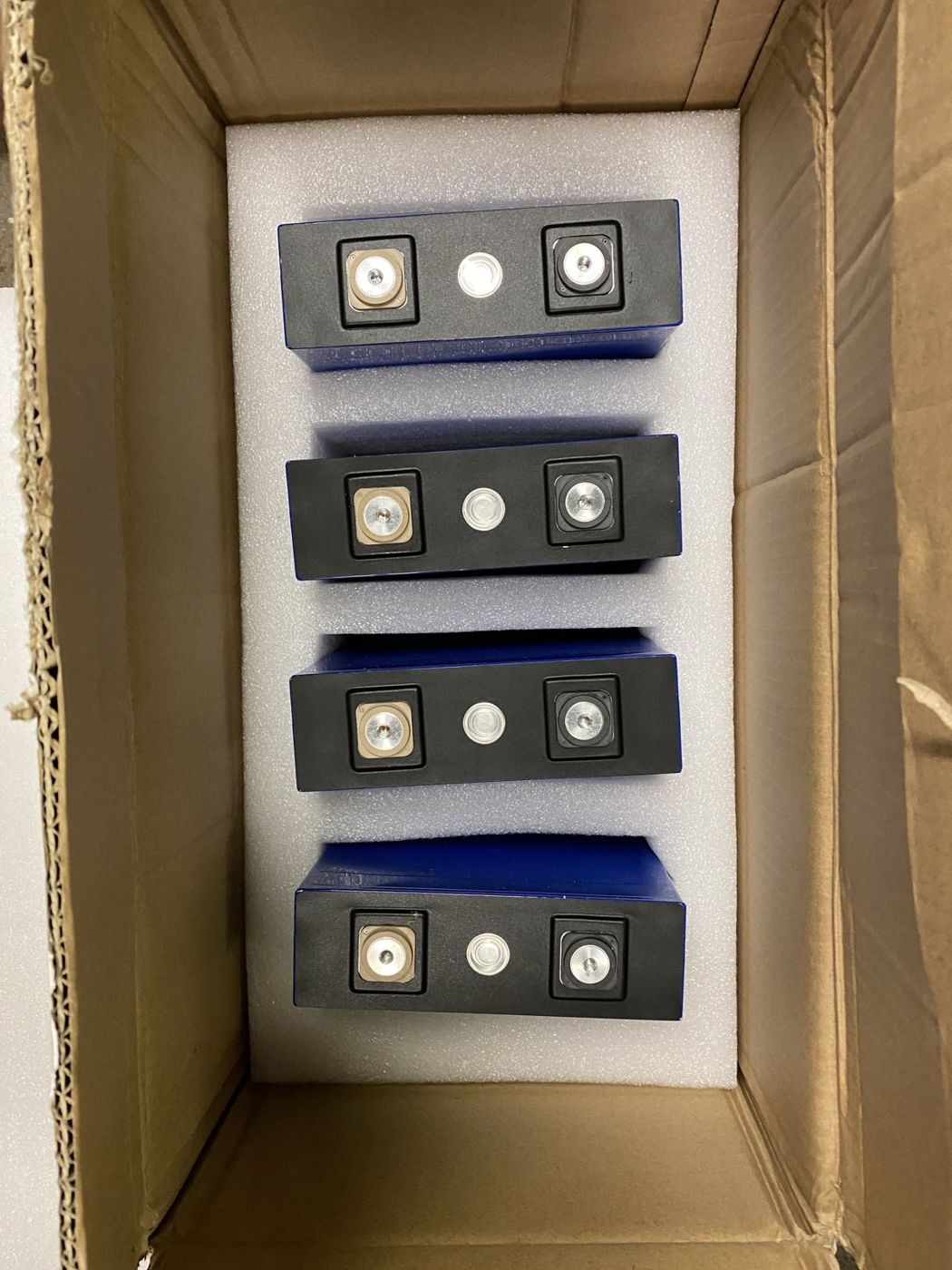
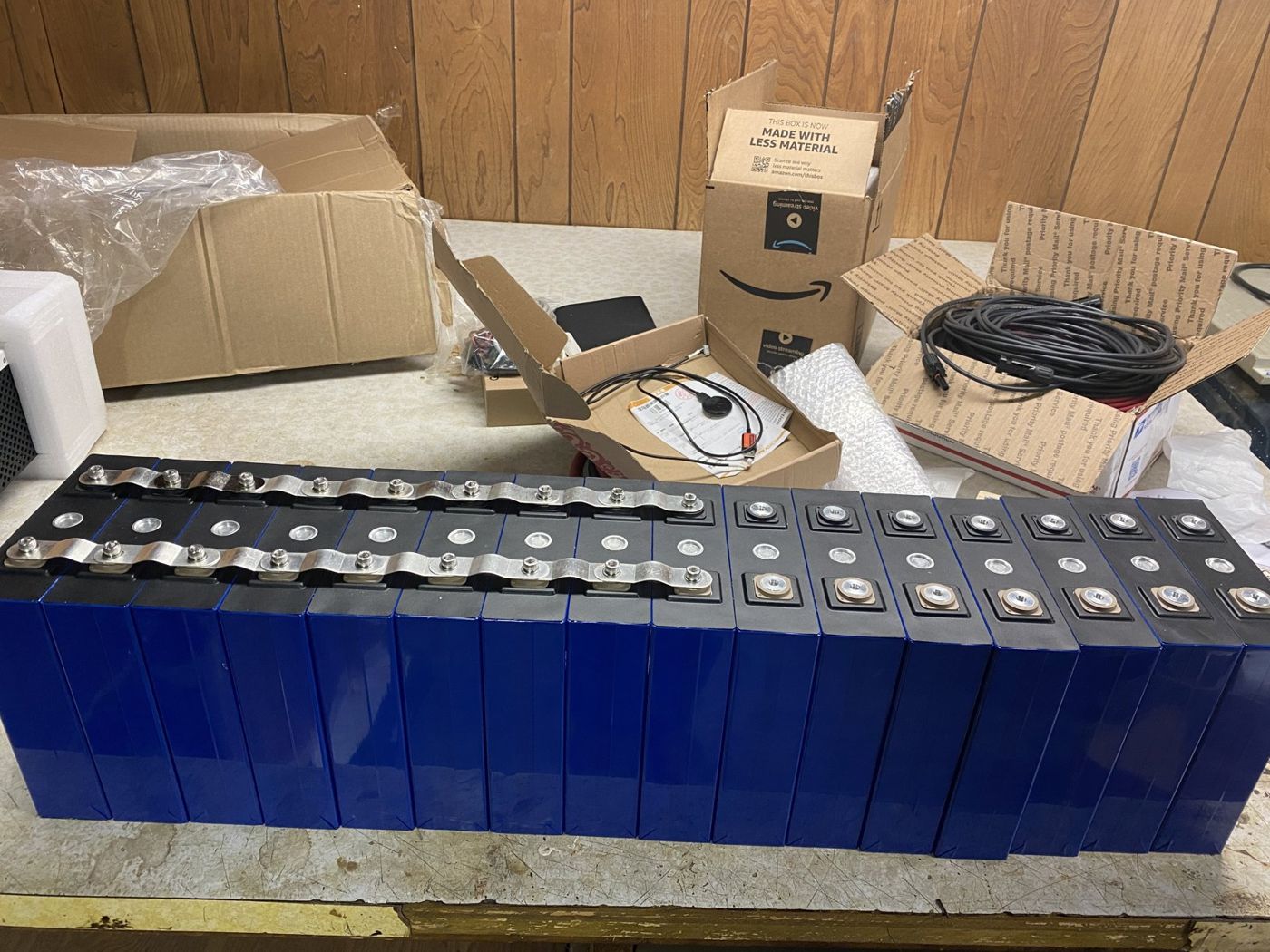
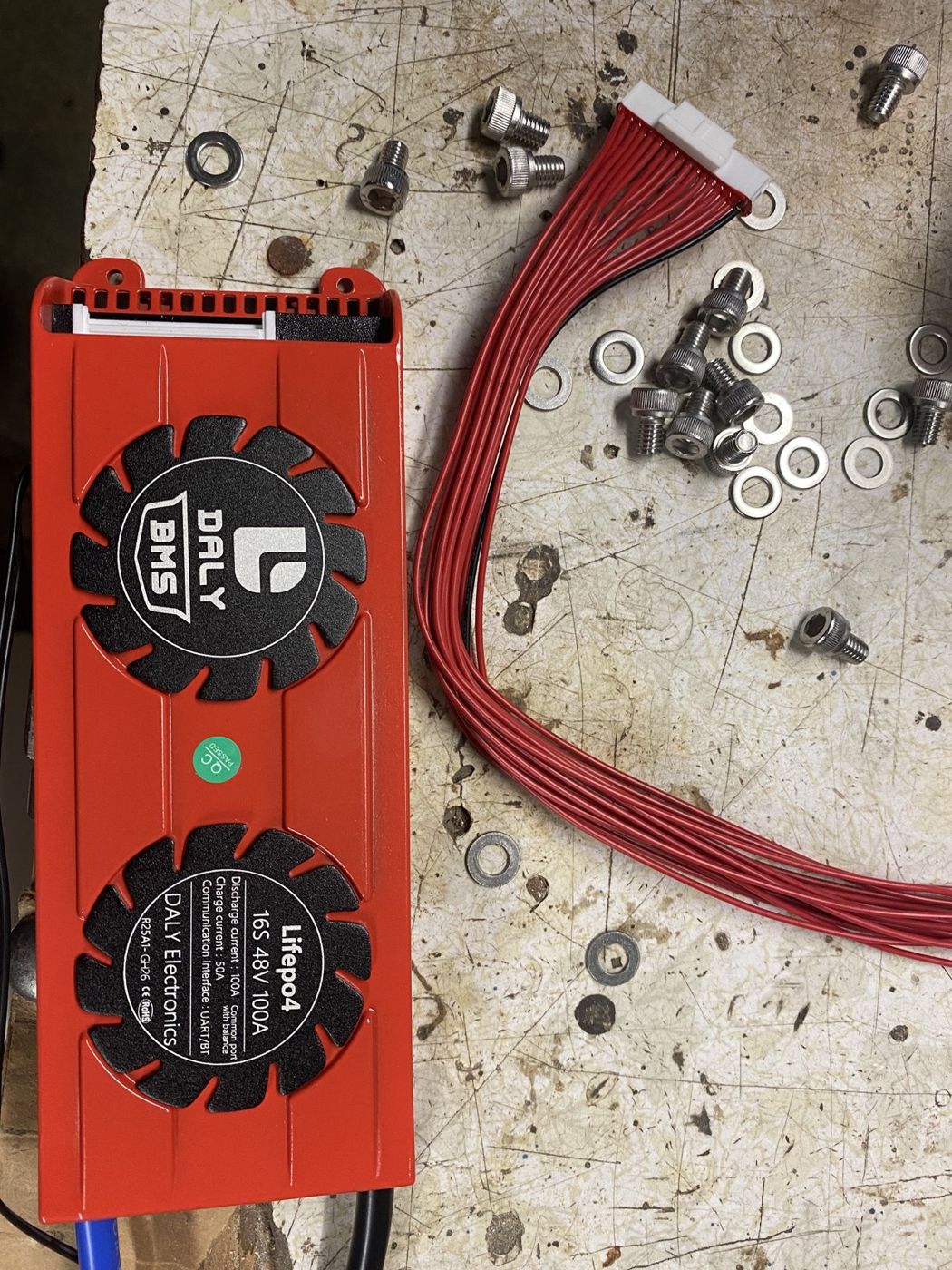
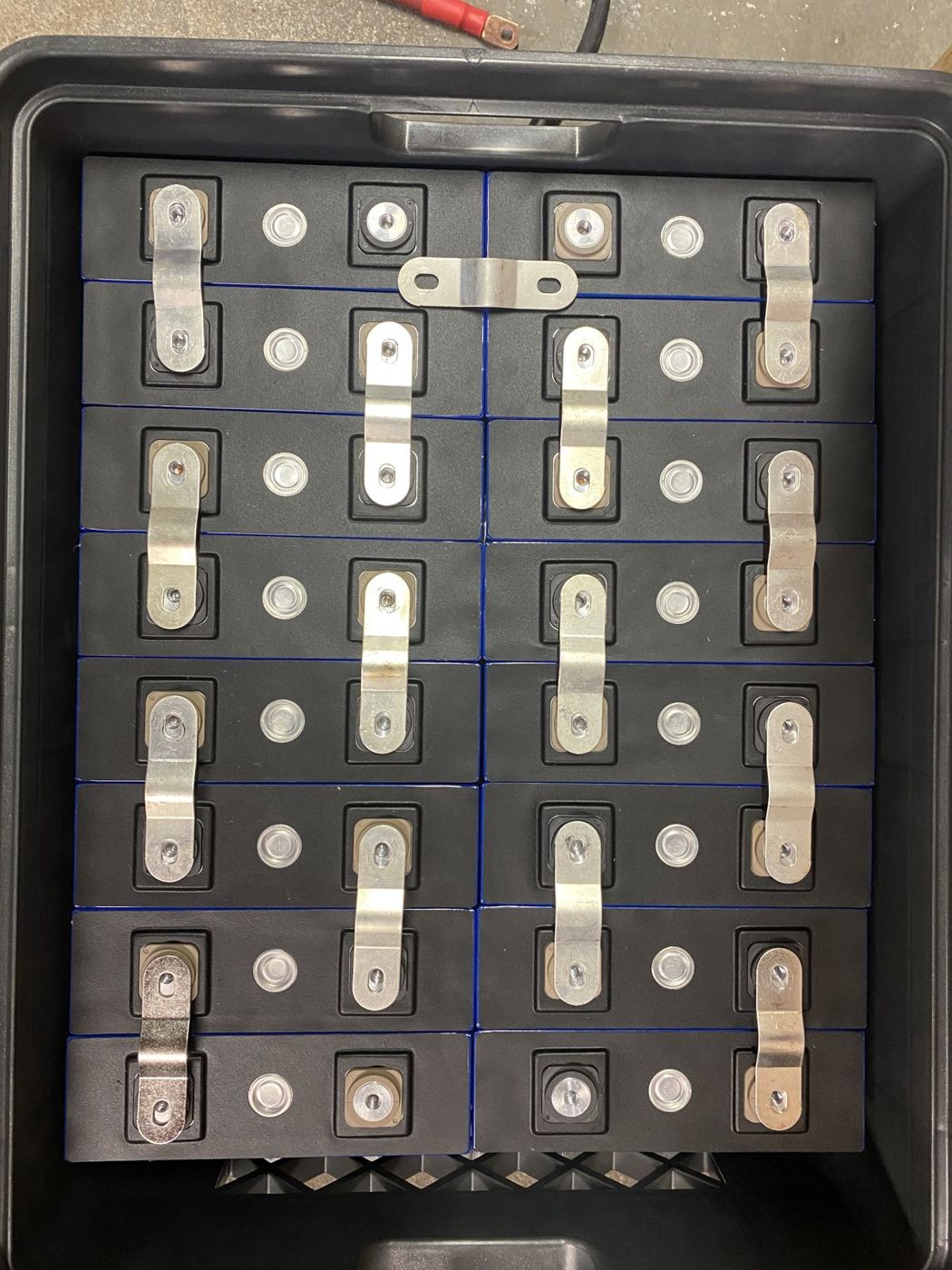
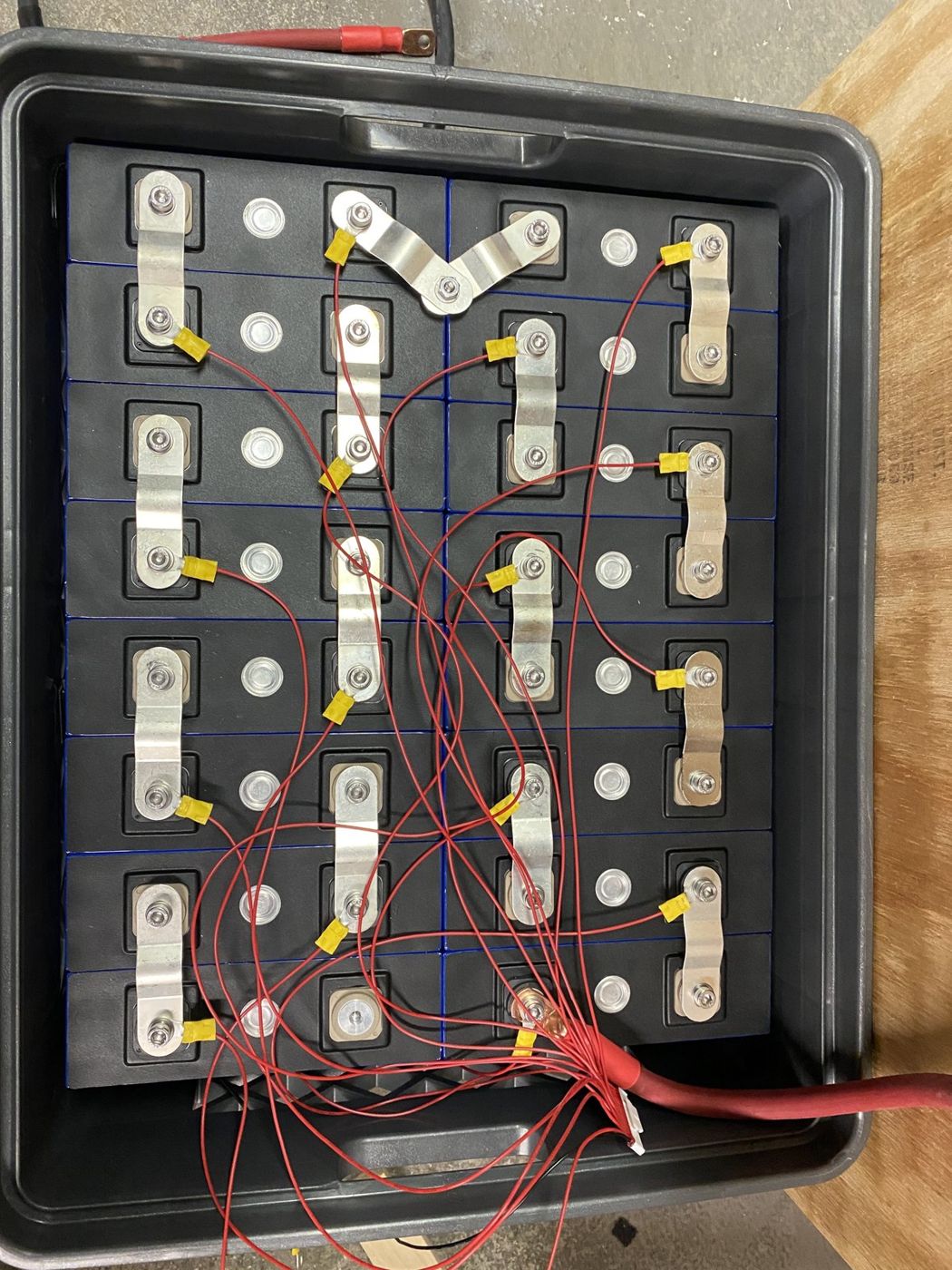
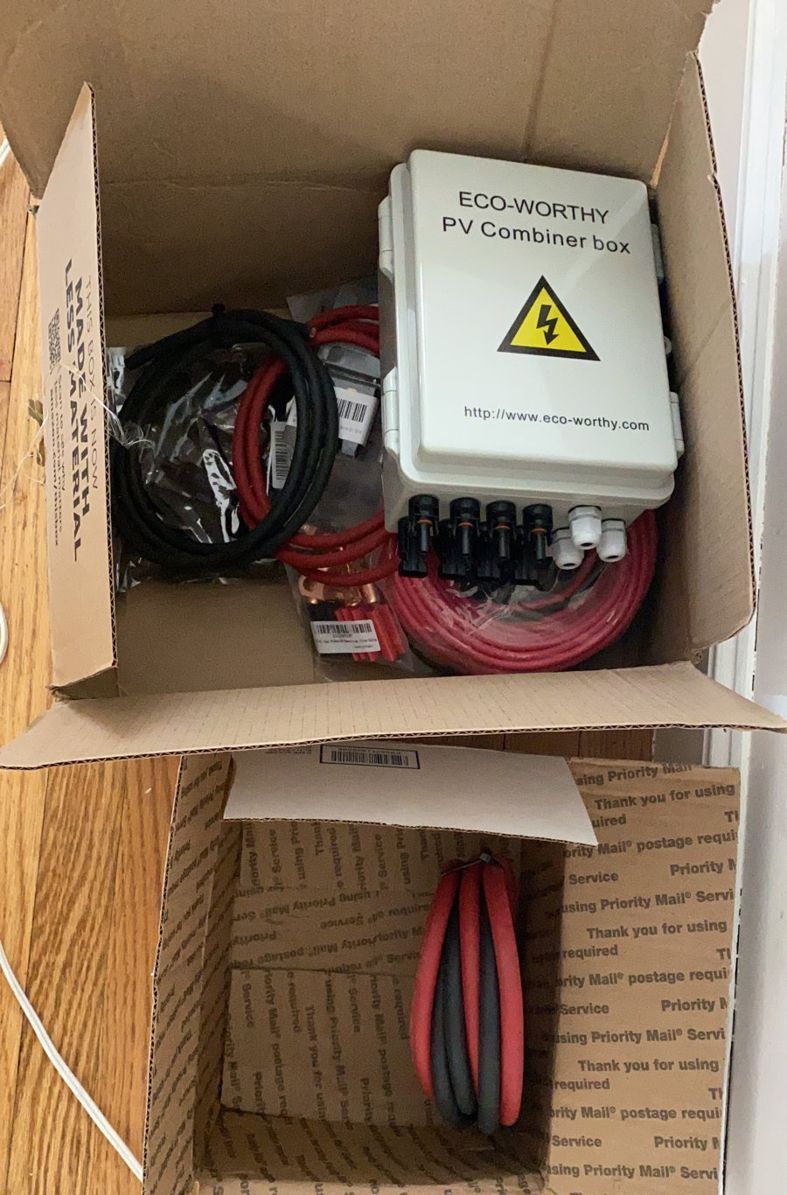
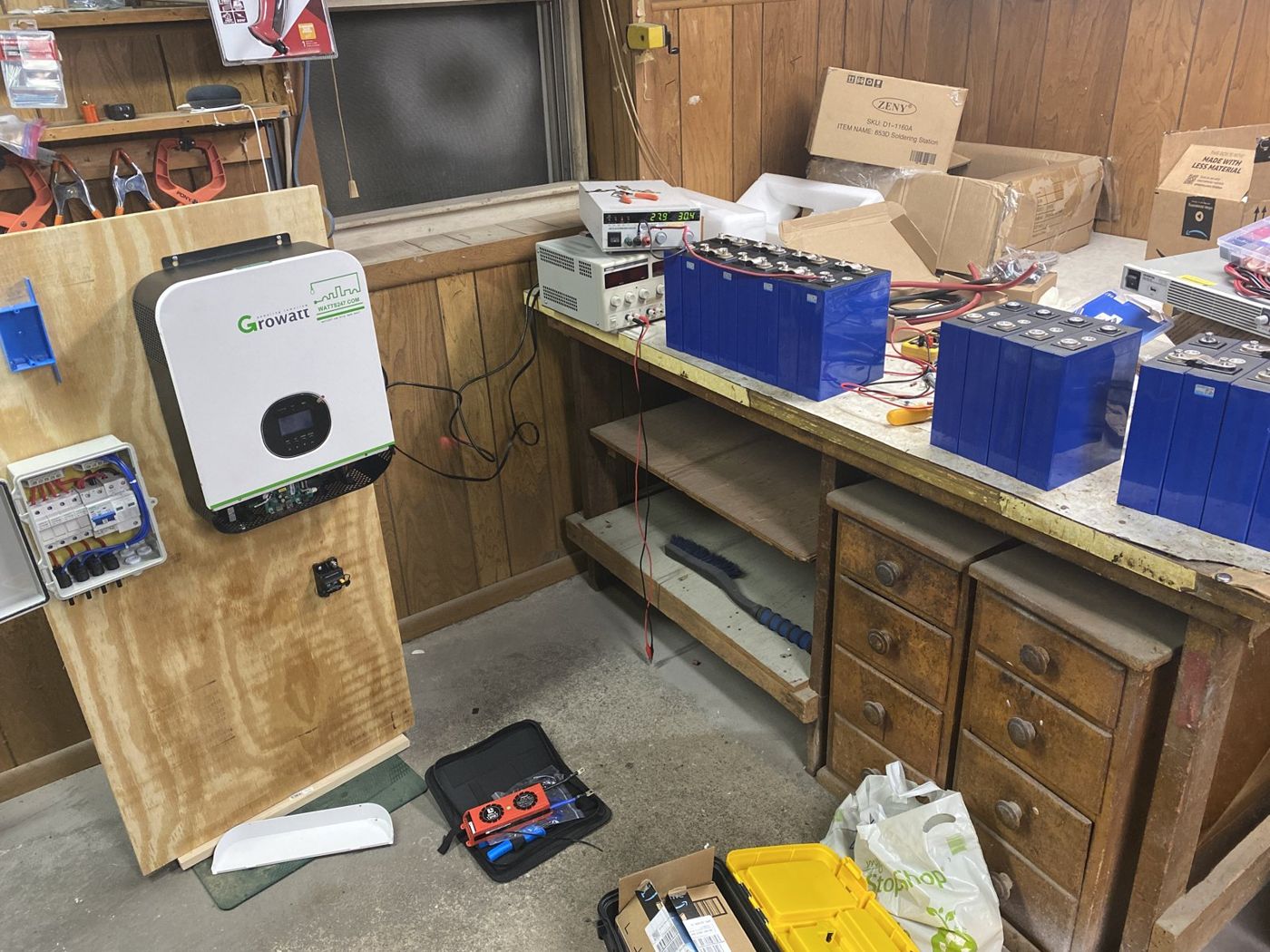
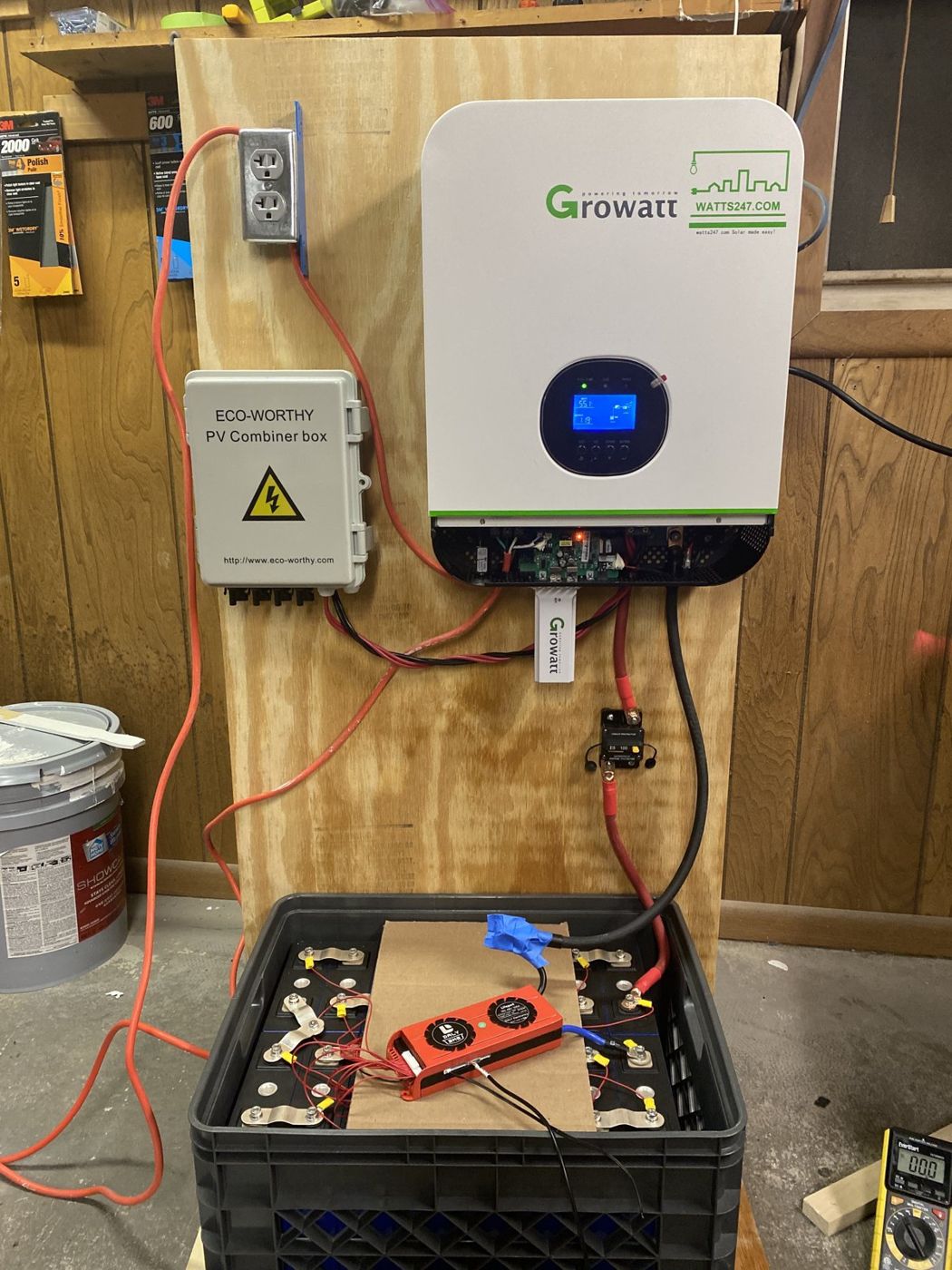
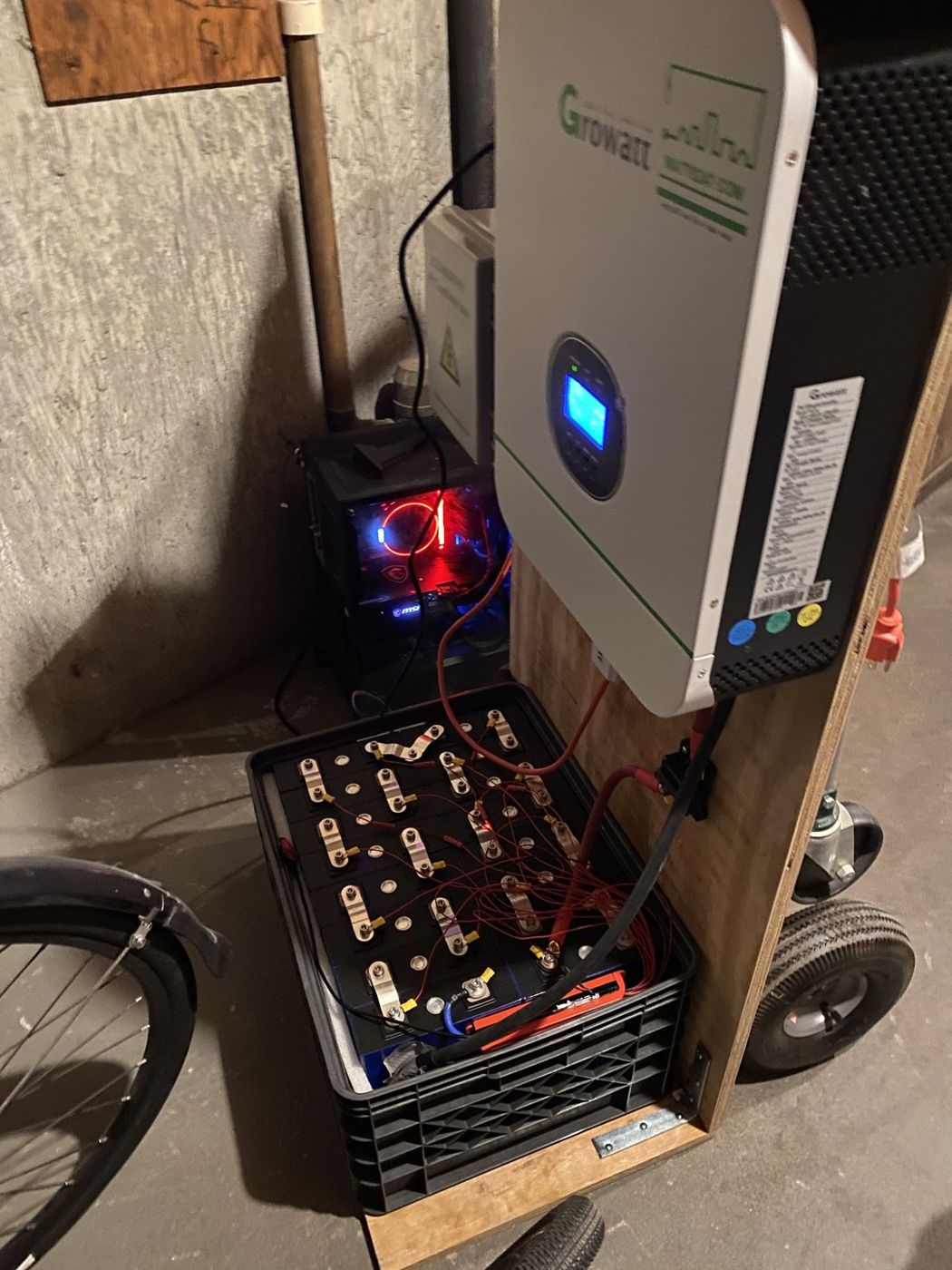
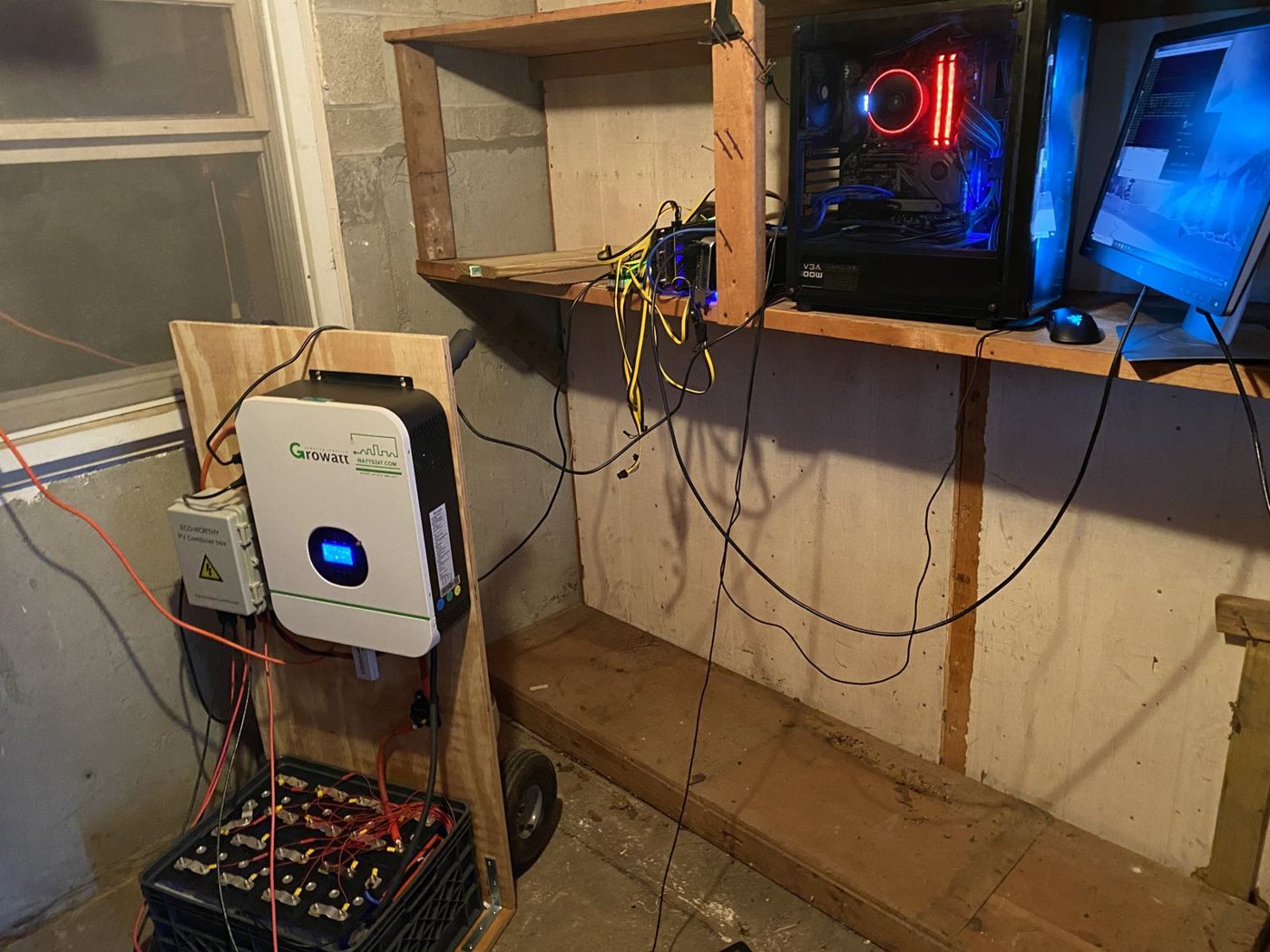
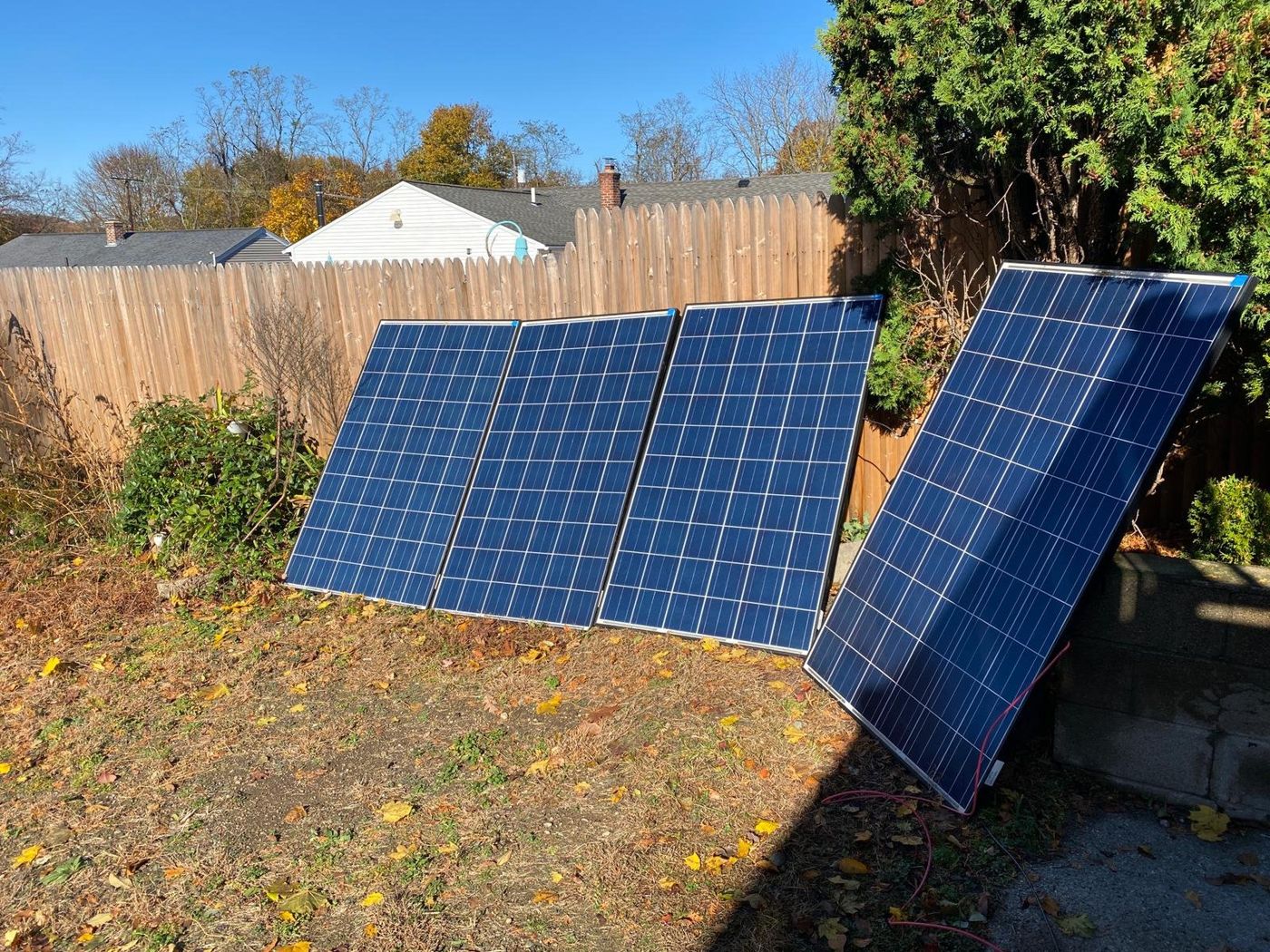
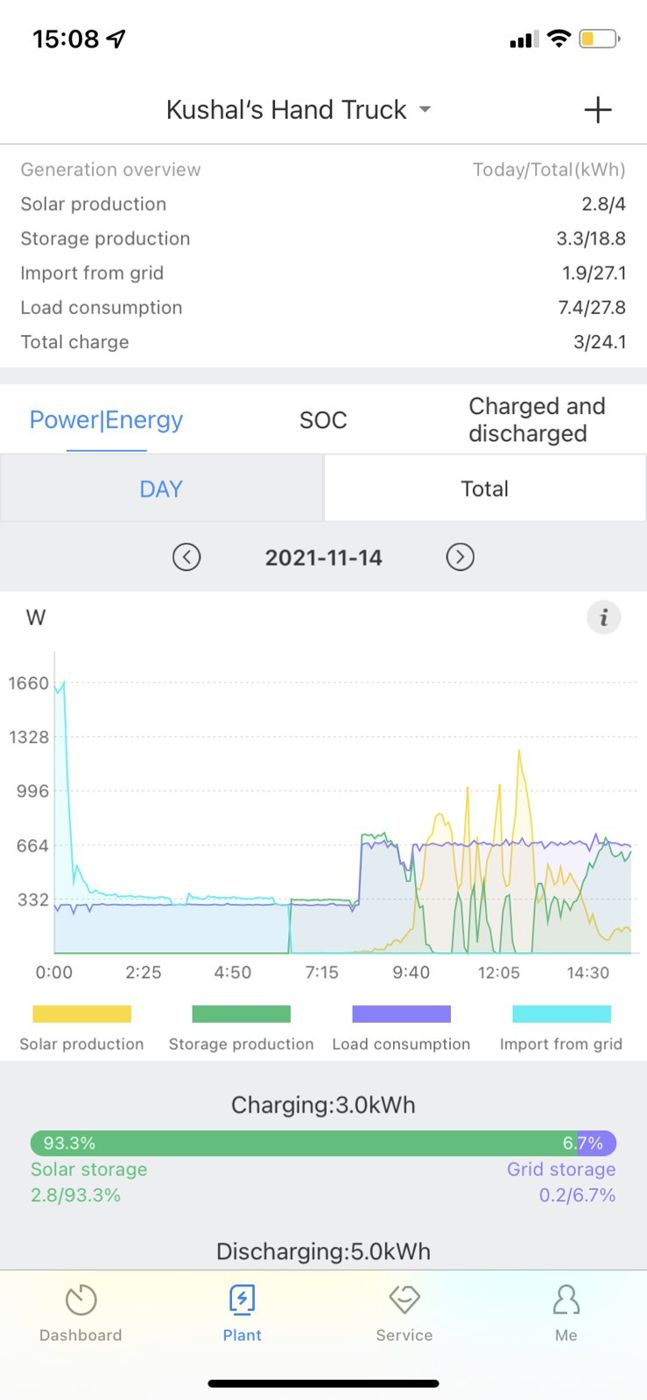
I built a solar system with a 48 V, 200 Ah battery to run the mining rig. I built the battery pack myself, and put together the combiner box and inverter, and mounted everything on a dolly cart so it can be moved.
Curriculum vitae
Fremont, CA · [email protected] · LinkedIn · Google Scholar · Patents
Summary
Power electronics engineer and inventor working on delivering more than a thousand amperes to AI and data-center processors efficiently. Named inventor on 8 issued U.S. patents and 2 pending applications, in three areas: power modules for vertical power delivery, trans-inductor voltage regulator (TLVR) control, and series-stacked power delivery. Inventor on the inductor-assembly and co-packaging patents behind Infineon's TDM data-center power modules. First author and presenter at IEEE APEC 2021. Peer reviewer for four IEEE publications.
Experience
Silicon Validation Engineer, Apple Inc., Cupertino, CA Apr 2023 – present
- Hardware DRI for power management unit (PMU) programs; owned development of the silicon-validation hardware on the critical path to qualifying new power silicon.
- Designed and validated PMU hardware in Cadence System Capture and Allegro, including power integrity analysis in PowerSI, SIWAVE and HFSS, and bench bring-up and failure analysis.
Sr. Staff Applications Engineer, Infineon Technologies, Warwick, RI and Milpitas, CA Apr 2019 – Apr 2023
Product Definition Engineer in Applications Engineering: led the definition and validation of power stages, then took on power modules. Promoted from Senior to Staff to Sr. Staff.
- Power modules. Inventor of the inductor-assembly and co-packaging technology in Infineon's TDM dual-phase power modules (9×10×5 mm) for data-center and AI processors.
- Power stages. Co-inventor of the chip-embedded power stage with a floating shielding pad (US 12,431,367 and its continuation).
- TLVR. Derived the transfer function of the trans-inductor voltage regulator and built and validated Infineon's first TLVR prototypes; co-inventor of US 11,876,445.
- Stacked power delivery. Led Infineon's work on series-stacked power delivery; first author at IEEE APEC 2021 and inventor on three issued patents.
- Best Team Player, Infineon Enterprise Power division (December 2022).
Power Electronics Engineer, Lucidity Lights Inc., Boston, MA Jul 2018 – Mar 2019
- Developed a low-cost AC-DC flyback converter with power factor correction for dimmable induction lighting, from concept to production prototype; led FCC Part 18 EMC testing.
Graduate Research Assistant, University of Colorado Boulder Feb 2017 – May 2018
- Researched ZVS series resonant converters using magnetostrictive piezoelectric composite devices for DARPA's MATRIX wireless power transfer program; reached 61% wireless power transfer efficiency.
Junior Project Engineer, Wavelet Technologies, Pune, India Aug 2014 – Jul 2016
- Designed, simulated and prototyped analog circuits; hardware testing and rework on FPGA boards.
Patents
8 issued U.S. patents and 2 published applications. Each number links to its Google Patents record. Position is my place in the inventor list.
| Patent | Title | Date |
|---|---|---|
| Power modules and power stages | ||
| US 12,738,406 | Inductor Connectivity and Assemblies | Issued Sep 15, 2026 |
| US 12,532,737 | Semiconductor Device Package Thermally Coupled to Passive Element | Issued Jan 20, 2026 |
| US 12,575,023 | Voltage Regulator Module Having a Power Stage | Issued Mar 10, 2026 |
| US 12,431,367 | Embedded Package with Shielding Pad | Issued Sep 30, 2025 |
| US 2023/0369256 | Multi-Device Power Module Arrangement | Published Nov 16, 2023 (pending) |
| US 2026/0018427 | Embedded Package with Shielding Pad (continuation) | Published Jan 15, 2026 (pending) |
| Trans-inductor voltage regulator control | ||
| US 11,876,445 | Trans-Inductance Multi-Phase Power Converters and Control | Issued Jan 16, 2024 |
| Series-connected dynamic loads | ||
| US 11,990,748 | Power Supply System and Control in a Series Dynamic Load Configuration | Issued May 21, 2024 |
| US 11,837,959 | Power Supply System and Control in a Dynamic Load Configuration | Issued Dec 5, 2023 |
| US 11,462,988 | Power Supply System and Current Control Based on Consumption by Dynamic Loads | Issued Oct 4, 2022 |
Conference presentations
- First author and presenter, IEEE APEC 2021 industry session: Power Loss Reduction in Power Distribution Network Through Vertical Stacking, with D. Clavette, P. Kasturi and W. Huang (Infineon). Virtual conference, June 14–17, 2021.
Peer review
- Reviewer for IEEE Transactions on Power Electronics, IEEE Open Journal of Power Electronics, IEEE Access and IEEE Power Electronics Magazine (2026).
Education
- M.S., Electrical Engineering (Power Electronics), University of Colorado Boulder, 2018. GPA 3.9/4.0.
- B.E., Electronics and Telecommunication Engineering, University of Pune, India, 2014. First Class with Distinction.
Verify: all sources
Every source used on this site, in one table.
| Statement | Source | Type | Date |
|---|